Sunday, October 7, 2012

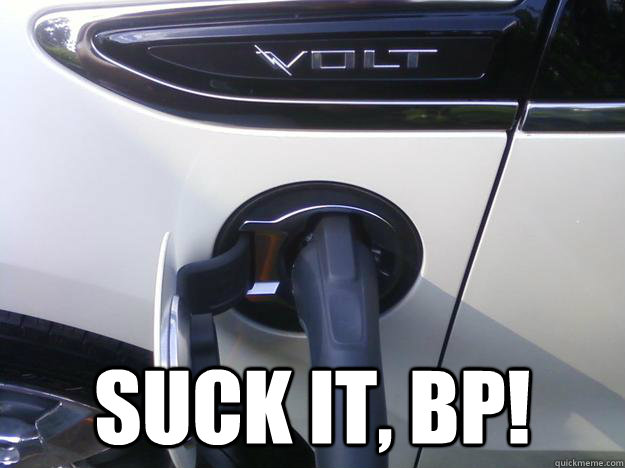
Fill 'er up pt. 2 - charging while playing

Now that your Volt is charged up, you can get about 20 miles from home if you want to get back without using any gas.  But what if there was another charger waiting for you at your destination?  Unlike the level 1 charger found in the trunk of the Volt, public stations typically give a 240v charge that bring a battery to life in no more than 4 hours. You could run your battery all the way down, plug in when you get where you're going and let it charge back up while you eat, shop or catch a show.  But how practical is this, really?

Of course it depends largely on where you live.  I've been to places in Nevada where it seemed like the houses were 40 miles apart.  I've also lived in Chicago and must have driven 40 miles a night just looking for a parking space when I got home.  But having purchased a Volt, I've had reason to do some research into public charging stations in the Detroit area.  Hopefully, what I've found will be useful to other EV drivers around the country.

The first trick I learned, and this works anywhere, is to type "electric charging station" + the name of your city into Google.  Since the charging station is a recent development, the results you get may be inaccurate and incomplete.  For example, Google led me to the Mercedes/Benz research facility in Redford, the UAW headquarters in downtown Detroit and the Edision electric company parking lot in Hamtramck.  In all of these locations, the charging stations were installed specifically for employees and visitors.  Edision and the UAW locations went so far as to put up a fence and hire a security guard.


Other locations were slightly more useful.  NextEnergy in Techtown, a high tech enclave near Wayne State University, had several charging stations for company research vehicles and one public charging station.  When I went in to inquire about charging, one of the engineers volunteered to start up one of the company stations since the public one was in use.  I was told a university professor parks there a couple times a week, so if he wasn't there, during business hours (9-5 M-F) I was free to use it.

The security guard at the DTE Energy HQ charging stations parking lot told me that they were for the use of DTE employees, guests and visitors of the nearby credit union.  I asked if I could park there.  She made a call to someone who asked someone else.  When she got off the phone, the guard said she would let me park there.  I think she might have been sweet on me and if it were another guard, I might not have gotten in.  In any case, by the time I left, the parking lot was pretty well full.  I suspect if word gets out, our welcome might run a little thin.  On the bright side, they are in the process of constructing a solar powered charging car port, so there may soon be a number of new spots opening up soon.

The Renaisance Center, the GM owned building that gives Detroit its unique skyline, has two conspicuously placed charging stations in front of it.  During the week, there always seems to be someone parked in both spots.  The first time I parked there, I couldn't figure out how to use the Chargepoint station.  A security guard inside told me there were charging stations in the garage around the corner.  This incident highlights a couple of important points.

First, most public parking garages downtown have or are installing parking spaces specifically dedicated to electric vehicles.  The electricity is free with paid admission.  Parking prices range from $1.50/hr to $50/mo.  This isn't exactly a cost effective method for charging a car, but if you were going to pay for parking anyway, it's a welcome perk.  Ever seen a garage that gassed up your car for free?

The other is the Charging station itself.  Many of the garages had consumer models of the level 2 charger installed on the wall near the parking spaces.  But the most common unit was the Chargepoint, a comercial grade charging station that looks more like a space age phone booth.  There are three ways to activate the unit.  If you have a credit card with an RFID chip in it, you can just tap it on the unit and it will unlock the handle to begin recharging.  If you don't, you can call the 800 number found under the LED display.  If you read the station's ID code from the display to the customer service representative, they can unlock the handle remotely.  While you are on the phone, they will likely offer the third option: a Chargepoint card.  It is a plastic card with an RFID chip that goes on your key chain.  You can use it as you would the credit card.

The customer service representative I spoke with told me that it was the patron who had the Chargepoint station installed who decided what would be the cost for the service.  However, of all the Chargepoint stations I've been to so far, none has charged for the service.  I suspect that as the EV becomes more common, we'll see this free service go the way of free air pumps.  But I hope this business model survives in some fashion. 

While my car was hooked up  to the Chargepoint station in front of the Ren Cen, I was around the corner at Foran's having a pint and a bowl of "the city's best chili".  Another Chargepoint station in Westland is located in the parking lot of an apartment complex.  The manager told me no one at the complex had an EV, but people frequently park them there while shopping at the mall around the corner, people who could potentially be clients someday.  And Schoolcraft Community College has 4 Chargepoint stations (two by the main entrance, two by the library).  Not only does it offer a service that can attract students, but it shows the college's interest in developing technology.

On the other hand, there is the Blink business model.  Blink offers a pay as you go system.  When you sign up for their program, you have the option of a paid membership with charging rates as low as .50 cents an hour or a free membership with much higher rates.  Remembering that a full charge is roughly equivalent to a gallon of gas, this may or may not be such a good deal.  If you get the free membership and spend $1.50/hr, you're effectively paying $6/gal. for your fuel.  It's $2/gal. with the paid membership, but it loses it advantage if you're not charging there every day. 

There are two Blink stations in the Detroit area.  Both in the tawny suburb of Ferndale, just a few blocks from each other.  I spoke with the parking enforcement officer while doing my research.  He pointed out two problems:  With parking being at a premium during peak hours, people often park gas powered cars in those spots.  With just two spaces for EV drivers, that doesn't leave too many options.  The other problem is that it only takes 4 hours to completely charge the car, but people who drive their EV to work will leave it there all day, even after it's charged. 

So to review the methods for finding a charging station in your area: 
1) Google "Electric charging stations" + your city.
2) Enter  your zip code into the Chargepoint station finder.
3) Check the Blink station map.
4) If you're in the Detroit area, check my Google map, the result of search the sites mentioned above an a bit of old fashioned leg work.

 Of all the public charging stations I have been to so far, I have to say that the best I have found has been on the 6th floor of the MGM Grand casino parking structure.  There are 13 charging stations (guess they're not superstitious after all) 6 level 1 units and 7 level 2.  There is no cost for charging there, but once you're plugged in, you have to go through the casino.  If you're not careful, these could be the most expensive kilowatts you ever get.


But if you do manage to run the gammut, I recommend you find your way to Lucy and Ethel's on the corner of Bagley and Cass.  If you order the omlette, make sure you try the hot sauce.

Sunday, September 30, 2012

Fill 'er up pt. 1 - charging while sleeping


Once, spending a long time refueling your car meant it was cold out and you forgot your gloves.  You could put the gas cap under the handle and sit inside with the engine running.  Anymore, that won't be much of a solution.

The Volt comes with a level 1, Voltec power supply that plugs into a standard, 120V, grounded outlet.  With it, a full recharge of a depleted battery  will take about 10 hours.  No one wants to sit around listening to the radio that long, so we're going to have to use a new way of thinking of refueling in the electric vehicle era.

Recharging an electric vehicle (EV) will have to take place while occupied with one of three other activities:  Sleeping, working or playing.  We'll look at the the later two in upcoming posts.  Right now, lets look at charging your car while you sleep, or home charging stations.

As I just mentioned, the Volt comes with a standard charging unit called the Voltec.  It has three pronged plug on one end, the standard J-1772 connector at the other end of a 20' long cable and a transformer box in between.  When I bought my Volt, I didn't have to make any drastic changes in my life to use it.  When I get home, I plug it in, get something to eat, watch some TV, go to sleep and when I wake up, the car is ready to go.  I could, however, get a level 2 charging station installed and there's a number of reasons to do that.


The most obvious reason is speed.  A 240v charging station can transfer the same 10 klours to your battery in just 4 hours.  If you make a number of short trips during the day, plugging into a level 2 charger can give you enough energy in one hour to cover 10 miles as opposed to just 4 miles using the level 1 charger.  If you don't run the battery all the way down, this will allow you to bring it back up to capacity between runs.

Another reason is savings.  The electric company sells you electricity at two rates:  peak hours and off peak hours.  Peak hours vary from area to area (in Detroit, they run from 11AM to 7PM) but they are the hours when demand is highest.  When folks go to sleep and turn off the lights, the price drops a couple cents per kWh, but it adds up saving you 25% by comparison.  Since a level 1 charger takes so long to complete the job,  you might often have to do some of your charging during the less desirable peak hours. 
There may also be lower rates in your area for electricity dedicated to electric vehicles.  DTE Energy (The Detroit area power company) offers a D1.9 electric vehicle rate available when you have a level 2 charging station installed with a separate meter.  They also offer a $40/month flat rate for EVs.

And, in Detroit anyhow, there is another incentive.  The DTE is offering up to $2,500 worth of products and services to get you hooked up. What this means in practical terms is that you can get one of four charging units available at differing price points and installation is free.  I plan to get the Power Xpress model since it can be unplugged and taken with me if I ever move.

If you're happy with a slow charge, good for you.  Getting a level 2 charger is a bit of a hassle.  But if you decide to go through with it, the level 2 charger you choose should depend on your lifestyle, the environment you in which you park your car and avilable incentives.  In the long run, owning one will prevent you from unecessarily needing to buy a lot of gasoline.


And who wants to do that?

Monday, September 24, 2012

National Plug in day 2012

Chevy hosted gatherings at 9 dealerships around the country this past weekend.  I attended the one held at Serra Cheverolet in Southfield, MI.  They plied us with sandwiches, soda and cookies then answered questions from the audience as they stalled for time while trying to get the simulcast to work.

The Volt's chief engineer, Andrew Farah took questions submitted in advance by participants at the event.  They said it would be available on line, but the live stream is understandably off line.  I'll post it if it pops up somewhere, but in the meantime, I'll hit the highlights.

There don't seem to be any plans for improvements to the battery capacity.  The increased range in the 2013 model is due to tweaking the software so that it dips a little deeper into the upper and lower limits of the batteries charge.  The philosophy isn't to get the highest possible number of miles out of the battery but rather to find a balance amongst the cost, weight and practical use of the car.  The Volt isn't a Leaf and GM doesn't want it to be.  However, if I understood him correctly, Farah did hint that they may explore an all electric version of the Spark in the future.

The 500 VDC, quick charging system isn't a good fit for the Volt.  In fact, it may be a bad idea to begin with.  While an electric vehicle can be 80% charged in half an hour as opposed to 4 hours using a 240 VAC set up, this can take a toll on the battery's life.  The folks at Toyota (they took a lot of pot shots at them throughout the day) recommend that Leaf owners not use this method more than once a day.  So, much for the dream of hopping from charging station to station across the country gas free. 

Covering the Volt with solar panels wouldn't do much good.  The benefit of the wattage gained from such a small surface area is completely out weighed by the cost of the cells.  If you are looking for a purely solar powered car, someone is working on that, but it's not in the GM product line right now.  However, in the back of the Serra dealership, there is a solar powered charging station.  It filled up pretty quickly when they invited every Volt owner in the state to stop by for lunch.

After the presentation, I spoke with an animated young woman named Elishia.  She saw the Volt at the auto show, she started saving up for it years before it came out in 2010.  Her old car conveniently broke down the day the Volt became available in her area.  She expected to be on a waiting list and ended up being first in line.  Elishia warned me that the battery's range drops off significantly in the colder months.  She estimates that she can travel 40 miles in warm weather and only 25 when it gets below freezing.  The battery is like a person; it's happiest when we're most comfortable, between 60 and 80 degrees. 

The takeaway from the event was that owning a Volt takes a change in paradigm.  We'll have to get away from the idea of stopping quickly to refuel, get a charge when it's practical and enjoy the freedom that a back up generator offers.  Chevy Volt Communications Manager, Michelle Malcho did a fine job hosting the simulcast, but  I don't know why the didn't ask Adam Corolla to host it.  I guess they were probably trying to avoid the Toyota reference.  


Maybe next year.

Monday, September 17, 2012

The klour

"What kind of milage do you get?"


It used to be a pretty simple question.  Someone would ask and you'd give them a number.  You'd dig you hands in your pockets, rock back on your heels and say "Oh, I figure I get about 20 in the city and 30 or so on the highway."

Miles per Gallon.  It was a unit.  We all knew what it was because we all knew what a mile was and we all knew what a gallon was.  So what do you call it when your fuel comes from a plug rather than a pump?

If you look at your electric bill, you'll see somewhere in the fine print that you are charged by the killowatt-hour (kWh)  That is to say, every hour that you spend using a thousand watts of electricity.  This could be a 4 hour period during which you ran a 250 watt TV set or the half hour you spent blasting a 2,000 watt sound system. Every appliance in your home makes that disc outside spin a little faster and the number of times it goes around is called a kWh or "klour", as I affectionately call it.

A klour is not equal to a gallon of gas, but it is a handy unit we can wrap our heads around.  The Volt has a gas tank that holds about 10 gallons of gas and a battery that holds 10 klours of electricity.  Now, instead of comparing apples to oranges, we can at least compare oranges to grapefruit.

The sticker in the window says that a Volt will get 37 miles to the gallon, but it doesn't go that distance in the traditional fashion.  It actually runs a gas powered generator, much like one you would run behind your house during a black out. The electricty it generates charges the battery that runs the electric motor that propels the car. 

The sticker also says that the estimated range of the Volt on a full charge is 38 miles.  So another way of thinking of it is that one gallon of gas will generate 10 klours of electricity.  But where  you get those 10 klours is going to make all the difference.

The cost of electricity varies from state to state and in some cases hour by hour. The national average is around 12 cents per klour (In Michigan, the juice runs about 11 cents per klour).  So when I get those 10 klours from the power company it costs less than a buck and a quarter while getting them from the gas station is over $4.

To take it another step further, we could also say that if I took the $4 I used to spend on gasoline  and got my fuel from DTE (the power company), I could drive almost 4 times as far, effectively getting 138 MPG.  And that's using GM's estimated range on electricity.  When I take my time going down 8 Mile rd. doing 45MPH, I've traveled over 50 miles on that initial charge which would be equal to getting over 180 MPG on gasoline.

And that would be the cost if you got your electricity from a utility that generated it from comodity like coal, gas or oil.  What if you got that energy from a renewable resource like wind or solar?  Imagine a wind mill in every back yard and solar panels on the roof of every garage. Battery banks inside could hold the energy from them and recharge your car when you got home each night.  Picture parking lots covered with solar panels to charge your car while you were working or shopping.  Your vehicle would always be charged wherever you went and never need the more expensive gasoline for fuel.


Ah, never mind.  That's just crazy talk.

Thursday, September 13, 2012

The Calculus.

This is my first new car purchase, so the decision wasn't made without considerable thought.  My old car, a 2001 Hyundia Accent met an inauspicious end just shy of the 200,000 mile mark.  My motivations for getting a Volt were both pragmatic and emotional. I will share them with you here:


Milage

I'm certain this is the top reason anyone considers a Volt.  Initially, I would have preferred an all electric car, but that would have left me with the choice of either getting a Nissan Leaf or breaking into the Henry Ford Museum and stealing the last EV1 in existance (if you haven't seen Who Killed the Electric Car, it's worth your time).  But in a sense, the Volt is an all electric car.  It just has a portable, gasoline powered generator in the trunk in case the battery runs down.

The Leaf has a larger battery with a range of about 100 miles.  The Volt has a smaller battery with a range of around 40 miles.  The advantage is that generator.  I know how often I forget to charge my cell phone.  Sooner or later, I'm going to do that with the car no matter how far I can go.  But a 40 mile range still serves my purpose of commuting since my work place, Beaumont hospital is within range (27 miles).  I work a 12 hour day and it takes 10 hours to fully charge the Volt using its 120v power supply.  I figured if I plugged in at work, I could easily drive back and forth with a full charge each way and never need to buy another gallon of gasoline.


There are just two problems with this plan:  first, one Chevy dealer told me the Volt automatically runs through one tank a year so the gasoline doesn't turn to lacquer.  Fair enough.  Also, the hospital said security was not the department that decides how electricity was used and the corporate office still needed to consider whether or not they would let me plug in to one of their lamp posts (more on that later. stay tuned). 

When last I checked, electricity is .11 cents per Kw/Hr.  So, you could say the first gallon I use after plugging in only costs about a buck.  Or you could say that if I took what I spent on gas and fueled my car with electricity, I would get upwards of 280 MPG.  When the gas generator kicks in, I'm told the car still get 37MPG.  In other words, in a worst case scenario, my milage drops back down to what it was when I was driving the Hyundai. 

I can live with that.

Cool

OK.  So, here's the emotional reason to buy a Volt.  It really is a neat toy.  I know I said this is my first new car, and maybe everyone feels this way when they get their first new car, but this doesn't feel like a car.  This is something completely different.

First of all, you don't put the key in the ignition.  There is no keyhole.  You keep the key fob in your pocket and press the button on a center console covered with touch sensative icons.  When you push this button, there is a sound effect of an anti-matter phase inverter coming on-line. 

When you put the car in reverse, it feels like you're in neutral and rolling downhill except that you are clearly on flat ground.  When you put it in drive, there is a faint hum from the electric motor but loudest sound you hear is gravel on the pavement crunching under the tires.  Once on the road, the laws of relativity kick in and there is no way of telling how fast you are traveling without looking down at the speedometer.  (70 mph.  Hmmm. Better watch that.)  Driving a Volt for the first time is a truely disorienting experience.  I'm surprised they don't make you pass a road test on a closed course before you take it out.


These are the flying cars we were promised.

Environment

This is perhaps the most complex motivation on my list.  I'd like to think that if we all switched over to cars that didn't emit CO2 today, we could stop climate change and the subsequent effects, but I don't.  After seeing the size of the arctic ice cap this summer, I'm certain that the sun beating down on that newly exposed, dark water underneath  has us locked into a feedback cycle that will be hard to break.   The roof on the green house has already been sealed shut and the best thing one could do right now is start investing in beach front property in Orlando.

Even if the on board generator never kicked in, the Volt is not a carbon neutral vehicle.  The electricity has to come from somewhere and that place is probably kicking out its share of soda bubbles.  Anymore, that juice is most likely coming from a power plant using natural gas extracted using a nasty process that has become very popular of late, hydrolic fracturing or "fracking".  The only thing that puts out more carbon is coal and the only thing that puts out less carbon is nuclear.  Pick your poison.

So why bother?  What's the alternative?

Either we keep sending men and women off to die in the desert to get control of oil or we continue slopping the stuff around the gulf coast until we can get a decent po' boy sandwich anyplace and THEN we send our guys off to die in the desert.  If you think the XL pipeline is perfectly safe because it's nowhere near the ocean, you should talk to some of my friends along the Kalamazoo river.  The nice thing about melting the ice cap is that once all the polar bears are dead, there won't be anything left to protect and the oil will be easier to reach through the unfrozen soil.

The question is not if we can stop global warming but rather how bad do we allow it to get for our children and grandchildren?  After all, they will be the ones dealing with its effects while simultaneously choosing which nursing home we'll be staying in.  The Volt is not a panacea, but it is a quantum step forward in breaking our addiction to oil and a far more efficient use of energy for the purpose of transporation.


Currently, there are no "clean coal" power plants, but if carbon sequestration is ever going to become a reality, it will happen in a building and not in the trunks of our cars.  The waste from nuclear power plants may be with us for millions of years, but if we don't survive another century, that might not be such a big problem.  I don't know if man-made earthquakes are reason enough to stop fracking, but if your drinking water catches fire, you are clearly doing something wrong.  And both gas and nuclear power producers are going to have to agree to serious regulation and oversight if they expect us to believe they are serious about solving the problem.

While power plants do produce CO2, they are far more efficient than the millions of tiny, mobile power plants we have in our cars today.  As was explained to me by a neighbor and Ford engineer, cars make the most CO2 right at start up while power plants start once and run continuously.  Electric cars would most likely charge while we are sleeping and power plants have the most capacity (in fact, the Volt has a feature that allows you to delay the charging period so it occurs during off peak hours).  And traditional cars burn fuel whether they are moving or not while electric cars only make use of their energy on demand.  So, while a traffic jam won't be anymore pleasant, at least you won't be creating smog while your dinner goes cold. 


But the best thing the Volt does by moving from hydrocarbon to electric propulsion is that it opens transportation to a world of sustainable power sources.  Serra Cheverolet in Southfield, the dealership where I bought my car, is a great demonstration of this fact.  You can see the two 117' wind turbines from the freeway (they have foam rubber windmills for promotional schwag.  They're cute but don't make good paperweights).  Around back, they have a long car port covered with solar panels (pictured above) that keeps their Volts charged.  This may be the most exciting development of all.

Can you imagine a car port like this where you work?  Can you imgaine these solar panels on your garage charging batteries all day so you can transfer the juice to your car while you sleep?  How about some of those fancy shingles on your roof, keeping your house cool while you sell the electricity back to the power company? 

Where else could we put these panels?  Factory roofs?  Over park benches?  The Arctic?

Solidarity

Last fall, I took part in Occupy Wall Street demonstrations both in New York and here in Detroit.  Later, as the movement took shape and added significance, I worked with the Occupy Our Homes organization which fought foreclosures and evictions in the wake of the housing crisis.  In both instances, union membership played a key roll. 


At the time, I could tell people that when I bought my  Hyundai, every penny went to an American.  And it did.  I bought it used.  If I got out the bill of sale, I could tell you the guy's name.  It was a snappy comeback I could use in a parking lot, but it was harder to explain to 60 members of UAW 600 when they're coming out to support what I was doing. 

This may sound like an emotional reason for buying a car, but it's actually more logical.  When the autoworker in Detroit suffers, we all suffer.  When they do well, they can purchase products, thus increasing demand and, as a result, actually create jobs.  It is not only for them to succeed, but for myself that I make this decision.  I love this city and I want it to come back and to become what it was meant to be, the home of the best vehicles on the planet.

There is a economic axiom that if you pay for something, you get more of it.  I believe this to be true.  That's why I want General Motors to know that they don't sell cars in spite of their unionized workforce; they sell them because of it.   Union members don't just support our community, they are an integral part of it.  And when we went through our darkest hour, they stood up for us. 

I want to see more of that.